Custom Patches for UK Scouts, Guides and Sports Teams: A Local Guide
There's a particular pride in a camp blanket covered in patches, and a particular irritation in thirty badges arriving two millimetres too wide for the sleeve they were meant for.
Custom patches do real work. They say where you're from, what you've done and who you did it with. Ordered well, they survive washing machines, muddy fields and being sat on. Ordered badly, they sit in a drawer until someone quietly bins them. Here's how to get the practical details right — sizing, placement, motifs and artwork — for UK youth groups and sports clubs.
Check the uniform rules before you draw anything
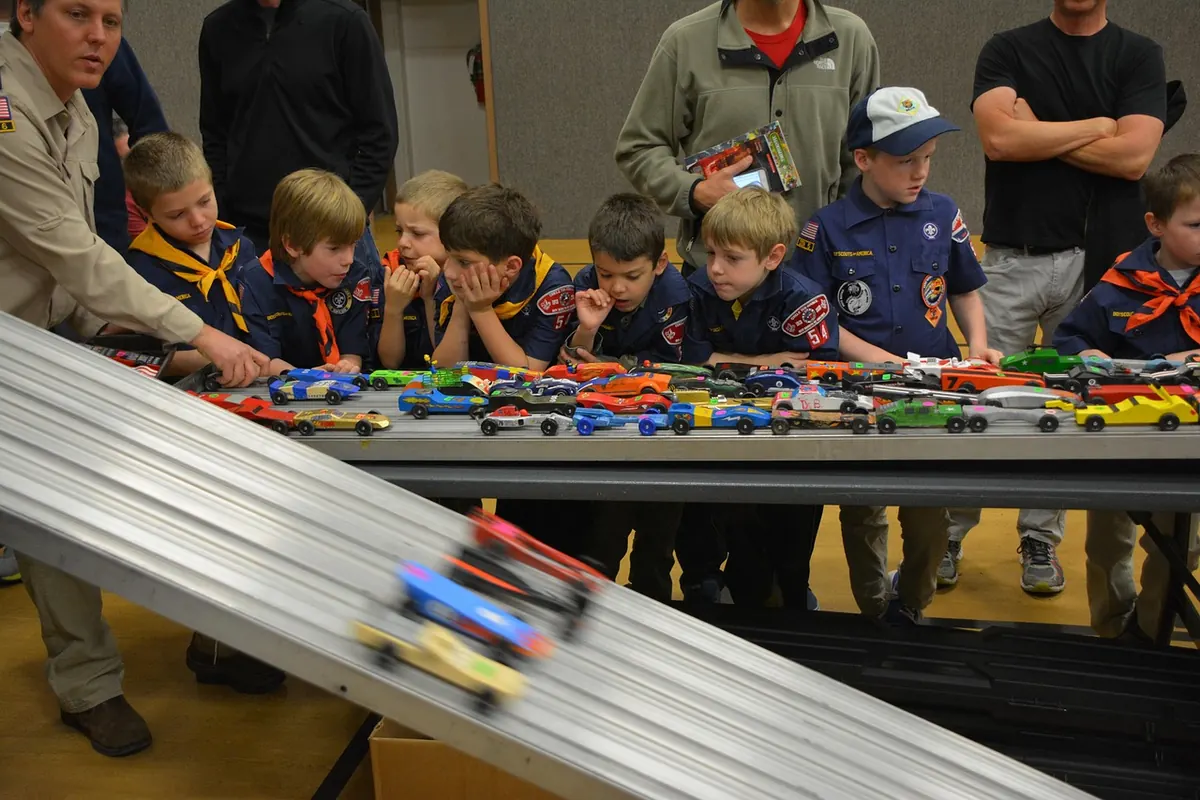
Scouts and Guides are the groups most likely to have their placement decided for them. The Scout Association and Girlguiding both publish uniform guidance for each section, from Squirrels through to Explorers and from Rainbows through to Rangers. Those documents, not a supplier's template, are the ones to follow — and it's worth rechecking the current version each time you order, because guidance does get updated.
Broadly, uniform badges live on the sleeves, with group and district identifiers pinned to specific spots on the shirt. Event and camp badges usually have a little more freedom, which is why a district camp badge can be a bolder shape than a group name tape.
Sports clubs are far more relaxed. A club crest sits on the left chest, over the heart; a sponsor's mark goes opposite; league or competition badges go on the sleeve. Beyond that you can more or less do as you like, which is both the good news and the trap.
Sizing: measure the space, not the screen
Designs look enormous on a laptop and tiny on a shirt. Before you approve anything, cut a circle or shield out of paper at the intended size and hold it against the actual garment, in the actual position.
- 50–60mm round: small sleeve badges, event patches, anywhere space is tight.
- 70–90mm round or shield: the workhorse size for camp badges, club crests and district identifiers.
- 100mm and above: back-of-hoodie, jacket and blanket patches. Fine on a blanket, often too much on a sleeve.
Shape matters as much as size. A shield or rectangle fits a curved sleeve better than a large circle because there's less wasted area at the corners. On a tight sleeve, a narrow rectangle with a small crest inside it will read better than a round badge squeezed in.
Then decide how it attaches. Sew-on lasts longest, particularly on performance fabrics and anything stretchy. Iron-on suits cotton and poly-cotton shirts but is unreliable on waterproof or coated jackets, and a hot iron can damage some modern uniform fabric — test on an inside hem first. Hook-and-loop backing is worth considering for anything that needs to swap, such as a coach's jacket or a camp blanket.
Placement that survives a season
Never place a patch across a seam, a shoulder yoke, a pocket flap or the fold of a hood. The stitching will pull and the patch will crease the moment the garment moves.
On hoodies and softshells, a smaller patch on the left chest and a larger one across the back works well and stays comfortable. On sports kit, keep the back clear of anything that would clash with a squad number.
Camp blankets are the exception to every rule. No convention, no grid, no wrong answer — which is why they end up as the best record a young person has of their time in the movement.
Motifs that work at badge scale
Patches are read from a distance, often in poor light. Bold shapes, strong contrast and thick outlines will always beat a detailed illustration.
- Place, not postcard: a lighthouse, a pier, a viaduct, a hill contour line, a county flower.
- Skills and adventure: compass rose, knotwork, paddle, boot prints, campfire, tent.
- Identity: a monogram of the group's initials, an anniversary year in Roman numerals, the club mascot.
- Sport: the equipment rather than a person — a ball, crossed bats, a shuttlecock, a finish line.
Keep it to three elements or fewer. Text below roughly 2mm in height rarely stitches legibly, so shorten the wording rather than shrinking it. Four to six thread colours is usually plenty; more means more cost and more chance of a shade that doesn't quite match your club's official colour.
One warning worth taking seriously: Scout and Guide emblems, the trefoil, and professional club crests are protected. Don't reproduce a logo you don't have permission to use. If you want something in that spirit, design an original mark instead — and if you're genuinely unsure whether a design needs clearance, ask before you order.
Artwork and ordering: what to sort first
Suppliers can work from most formats, but life is easier for everyone if you send vector artwork (SVG, EPS or AI), or a high-resolution PNG at 300dpi at the final size. Convert any fonts to outlines, or tell the supplier exactly which typeface you've used.
- Confirm design, size and placement with the people who'll wear it. A quick vote beats a committee.
- Count properly — exact numbers plus a handful of spares for new joiners and mistakes.
- Ask about minimum order quantities and price breaks; ordering slightly more is often better value per patch.
- Agree the lead time in writing and work backwards from your event date, leaving a buffer.
- Specify the backing and the edge finish — a merrowed edge gives a thicker, traditional border, while a hot-cut or laser-cut edge suits sharp geometric shapes.
- Ask for a digital proof, and for a physical sample before a large run.
- Keep the artwork file and order reference somewhere the next leader or club secretary can find it.
If you're spending group or club funds, keep the paperwork tidy: receipts, sign-off from whoever holds the budget, and a note of what each patch cost. Where fundraising income or a club crest is involved in anything more formal, such as registering a trade mark, take proper advice rather than relying on a forum thread.
A five-minute check before you press send
- Does the size fit the actual garment, measured with a tape?
- Is the placement allowed under your association's current uniform guidance?
- Is every element of the design original, or properly licensed?
- Will the smallest text still be readable at arm's length?
- Have you ordered spares and confirmed the delivery date in writing?
Get those five right and the rest is straightforward. A well-made patch, sized for the sleeve it's going on and sewn on straight, is a small piece of kit that a young person will still be able to point to in twenty years.
Photo: sdumas29 / Pixabay

You Might Also Like
A complete list of sewing supplies for attaching patches, from needles and thread to thimbles and scissors, plus beginner-friendly tips for a neat, secure finish.
Keep iron-on patches flat and legible for years with the right washing temperature, drying habits and ironing technique — plus quick fixes for lifting edges.